
20.08.2026

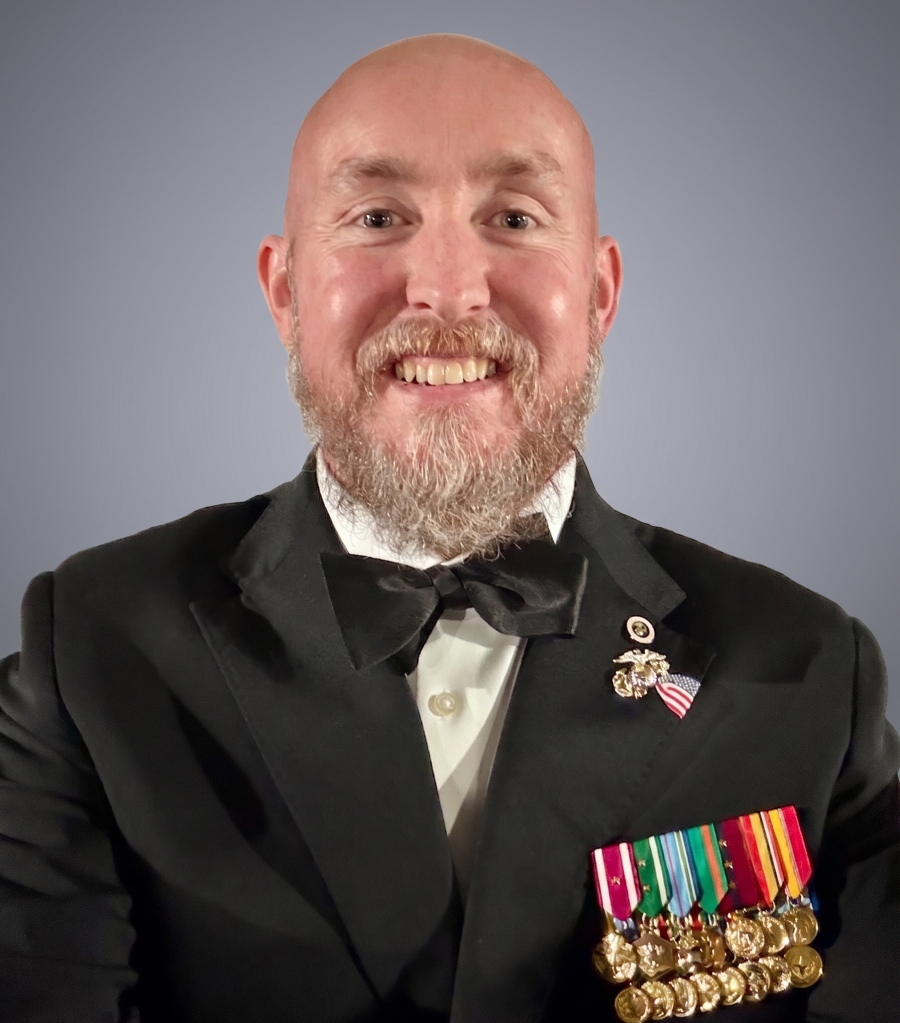
My 27+ year Marine Corps career spanned from Private (E-1) to Gunnery Sergeant (E-7), Warrant Officer (WO1) to Chief Warrant Officer 3 (CWO3), and Limited Duty Officer Captain (Capt) to Major (Maj). I was selected for promotion to Lieutenant Colonel but declined it to accept my current Senior Project Manager role at MANTECH on the MCWL/MCIA contract.
Enlisting in June 1997 through the Delayed Entry Program as a reservist (MOS 0481, Landing Support Specialist), I augmented to active duty after serving as a Recruiter’s Aide. I deployed twice in support of Operation Iraqi Freedom (OIF I with 15th MEU/MSSG-15 in 2003 and 1st FSSG in 2004), followed by a combat deployment to Afghanistan in 2012 as 1st Marine Division ANSF Facilities Officer. Key assignments included Landing Support leadership at CSSG-3 in Hawaii, the Marine Security Guard Program (embassies in Baku, Azerbaijan and Ottawa, Canada, plus Instructor/Advisor duties), Mobility Officer (0430) roles with 1st Marine Regiment and MAG-12 in Iwakuni, Japan (promoted CWO3 below zone and LDO Capt in 2016), Combat Cargo Officer with PHIBRON 8 and ESG-2 (DSCA support for Hurricanes Harvey, Irma, and Maria, plus Exercise Trident Juncture 2018), and staff positions at OPNAV N95 (core member on the LAW/LSM program) and HQMC PP&O. Later selected for Major below zone, I served as Assistant Strategic Mobility Officer (ASMO) with I MEF and III MEF.
I retired on 1 July 2024 after submitting my retirement request in December 2022 to be home for my son’s senior year of high school following years of frequent moves. My community and leadership supported my transition via the SkillBridge program with MANTECH.
Between honoring my promise to my children and the outstanding opportunity at MANTECH, I chose to decline the LtCol promotion and continue serving in support of warfighters in a new capacity.
Adaptability and Mission Focus: From rapid back-to-back deployments to shifting between enlisted, warrant and limited duty officer roles across diverse environments—embassies, amphibious squadrons, Pentagon staff at both Naval Service Headquarter staffs, and forward-deployed units—I learned to quickly assess changing conditions, reprioritize, and deliver results. This mindset continues to serve me well today in managing post-delivery phases and multi-stakeholder coordination on the STS SLV project.
In the end, the most important asset is our warfighters—the same age as my college-aged children, my friends and my former Marines still serving. Everything I do in my current role, and the passion I carry within, is aimed at doing the very best to influence capability decisions. I strive to provide them with the late-to-need platforms they would need to fight a peer competitor and win.
I am committed to reducing needless loss of life, and my conviction is to advocate for them to the fullest extent possible, drawing on the opportunities I have been given by both the U.S. Marine Corps and by MANTECH.
I was approached by the Marine Corps Warfighting Laboratory (MCWL) once they learned I was going to retire. They asked me to consider doing my SkillBridge with MANTECH.
To be honest, I did not know anything about MANTECH at the time and I told MCWL that this would not be my first choice as I had already applied from a Microsoft Skillbridge. But life had a different plan again, and I was not selected for the highly competitive Microsoft Skillbridge program. I went back to MCWL and MANTECH and expressed my interest of executing my Skillbridge with MANTECH. Because of this, and my past jobs, experience and skill set completely set me up to be a one of a kind SME that MANTECH wanted to hire to put me on contract with MCWL.
The hardest thing, and I still struggle with this even two years post-retirement; I am no longer an active duty Marine and while I provide SME input and perspectives, on a government contract, and as a contractor, my opinion matters less to leadership and that the level of influence possible while in uniform is no longer the same as a contractor.
The Marine Corps grooms their restricted officers (CWOs and LDOs) to speak their mind and oftentimes bluntly without regard for politically correctness as commander’s want frank and honest SME perspectives so they can make fully informed decisions. This is no longer the same on the Government side.
On the MANTECH side, all of this experience is invaluable and love the lead way and freedom provided to make decisions, and support the client the best way I see fit from my 27 years of experience.
I am especially grateful for the SkillBridge program and the mentors who took the time to educate and support me along the way.
My MANTECH Program Manager took me under his wing, providing guidance as I navigated the transition and developed new self-awareness after no longer wearing the uniform. The same holds true for my Division’s Vice President—his mentoring approach, support in daily tasks, and genuine interest in my SME experience and input motivate me to give my best to the client and to MANTECH. They have provided me with this outstanding opportunity and compensate me well, which inspires my full commitment.
These elements from my Marine Corps journey continue to guide my work as a Senior Project Manager. I remain focused on collaborative execution, clear communication, and achieving meaningful results for the team and mission—values that transcend uniform and directly support success in the MCWL/MCIA environment.
My 27+ years in the Marine Corps equipped me with strong soft and technical skills that translate directly into my Senior Project Manager role on the SLV (STS) project at MANTECH.
Key soft skills include leadership under pressure, adaptability, and teamwork—honed through back-to-back deployments in Iraq and Afghanistan and rapid role transitions across enlisted, warrant, and officer ranks. This enables me to manage dynamic post-delivery phases, multi-stakeholder coordination, and team development with my VAT group.
On the technical side, my experience as Mobility Officer (0430), Combat Cargo Officer, and Assistant Strategic Mobility Officer (ASMO) in strategic mobility, logistics, and expeditionary operations directly supports resource management, risk mitigation, and capability delivery for warfighters. I’m grateful for the SkillBridge program and ongoing mentorship from my Program Manager and Division Vice President, which have helped me integrate effectively and stay fully committed to the mission and MANTECH.
Transitioning from 27+ years in the Marine Corps to the civilian world was a significant change, but I’ve found my footing here at MANTECH more smoothly than I expected, thanks in large part to the strong support I received.
The SkillBridge program gave me a valuable bridge during my final months in uniform, allowing me to start building familiarity with the company and role before my official retirement date. Once I joined full-time, my Program Manager took me under his wing and provided thoughtful mentorship that helped me navigate the shift—everything from understanding civilian workflows to developing new self-awareness outside of the uniform.
My Division Vice President has been equally supportive, consistently seeking my SME input and experience while offering guidance on daily tasks. That combination of structure, mentorship, and genuine interest in what I bring to the table made me feel welcomed and valued right away.
I feel that MANTECH understands the value veterans bring. They’ve created an environment where my operational background in strategic mobility, logistics, and cross-functional leadership is actively applied to real mission outcomes—particularly on the SLV (STS) project. The way they compensate, support professional growth, and encourage me to advocate for warfighter capabilities shows they recognize the strengths veterans offer. It’s been a strong cultural fit, and I’m motivated every day to deliver my best for the team, the client, and the mission.
A typical day for me as Senior Project Manager on the STS SLV project varies depending on the phase and whether I’m traveling, but it generally centers on coordination, team leadership and stakeholder engagement to keep post-delivery activities moving forward effectively and working through multiple time zones (Washington D.C., California, Hawaii, Okinawa, Singapore, Indonesia, and Australia).
On a standard office or remote day, I start by reviewing overnight updates from the shipyard or team, then join stand-up meetings with my four-person VAT team to align on priorities and address any immediate issues. Much of the day involves coordinating with key partners—SeaLease, SeaTransport, CrewCom, shipyard, MCWL, MANTECH corporate, and other stakeholders—through calls, emails, virtual meetings, texting via signal, and status updates. I also dedicate time to reviewing technical documentation, tracking deliverables, managing risks, and preparing inputs for leadership. When we’re in a shipyard or sea trial phase, the day shifts to on-site support, systems commissioning, and real-time problem-solving in a more dynamic environment.
What I enjoy most about working at MANTECH is the combination of meaningful mission impact and strong support for veterans. I’m able to directly apply my operational experience to influence capability decisions that help warfighters, while benefiting from excellent mentorship from my Program Manager and Division Vice President. They actively seek my SME input, provide guidance during the transition, and create an environment where I can contribute fully. The compensation and opportunity to lead in a collaborative setting make it a great fit, and it’s rewarding to see the direct connection between our work and delivering better platforms to those who need them.
What I miss most about being in the Marine Corps is the deep sense of camaraderie and shared purpose that comes with serving alongside people who are fully committed to the same mission. There’s something powerful about the brotherhood—knowing everyone is willing to make personal sacrifices for the greater good, whether during deployments, training, or day-to-day operations. That tight-knit environment, built on mutual trust and a clear focus on supporting the warfighter, is hard to replicate fully.
In my civilian life at MANTECH, I find a meaningful version of that community through the teams I work with. My current MANTECH Vessel Assessment Team and the broader project stakeholders share a strong sense of mission—delivering critical capabilities on the STS SLV project that directly support those same warfighters. The collaborative environment, where we coordinate across SeaTransport, CrewCom, shipyards, MCWL, Australian Army, etc.and others to solve real challenges, echoes the joint effort I experienced in uniform.
I’m also grateful for the mentorship I’ve received. My Program Manager and Division Vice President have created a supportive culture that values my experience and encourages open input, much like the best leaders I served under. Outside of work, I stay connected through veteran networks, staying in touch with former Marines, and focusing on family—especially being present for my children after years of frequent moves. These elements help maintain that sense of purpose and connection, while allowing me to channel the same commitment into delivering results for the mission and the team.
If I could go back to the day I separated from the Marine Corps on 1 July 2024, I would advise myself to intentionally carve out a short period—perhaps a few weeks—to pause and reflect on the chapter that had just closed.
As a workaholic who draws a great deal of self-worth from contributing to the greater good, I moved directly from retirement into the SkillBridge program and full-time role at MANTECH without that breathing room. In hindsight, taking time to thoughtfully redefine who I was outside the uniform and rank would have helped accelerate that new self-awareness. That said, I would also remind myself to fully embrace the opportunities ahead. The transition has gone well thanks to strong mentorship from my Program Manager and Division Vice President, and the chance to continue supporting warfighters in a meaningful way.
The key is balancing that drive to contribute immediately with space to integrate the lessons and identity from 27+ years of service into this next phase.
For veterans looking to break into MANTECH and the cleared defense space, I’d offer a few practical insights based on my own transition.
First, take full advantage of programs like SkillBridge if eligible. It provided a smooth bridge from uniform to civilian role and allowed me to start contributing while still on active duty. MANTECH participates actively in these initiatives, which can give you a meaningful head start and demonstrate your commitment.
Second, clearly translate your military experience into the language of the role. Highlight soft skills such as leadership under pressure, adaptability in dynamic environments, cross-functional coordination, and mission-focused execution.
On the technical side, emphasize operational planning, logistics, stakeholder management, and any cleared background you hold. My 27+ years as a Mobility Officer, Combat Cargo Officer, and Assistant Strategic Mobility Officer translated directly into managing post-delivery activities on the SLV (STS) project. Third, prioritize finding strong mentorship early. My Program Manager and Division Vice President played a huge role in my success by providing guidance during the transition and actively seeking my SME input.
Be proactive in asking for that support and show your willingness to learn civilian workflows while sharing the unique perspective you bring.
Finally, stay patient with the self-awareness process. As a workaholic who draws self-worth from contributing to the greater good, I moved straight from retirement into the role without much downtime. In hindsight, even a short period to reflect can help integrate your military identity into this next chapter.
MANTECH values veterans and compensates accordingly, creating an environment where you can continue meaningful work in support of warfighters.
What I’m most passionate about is continuing to support those who serve—our warfighters—by helping deliver the capabilities they need to succeed in increasingly complex environments. After 27+ years in the Marine Corps, I saw firsthand the impact of having the right platforms and support at the right time.
Today, as Senior Project Manager on the STS SLV project at MANTECH and MCWL, I’m driven by the opportunity to influence capability decisions that provide late-to-need platforms for Marines, sailors, and joint forces facing peer competitors. Knowing these warfighters are the same age as my college-aged children, my friends, and the Marines I served alongside motivates me every day to advocate strongly for them and help reduce needless loss of life through better preparation and equipment.
I’m equally passionate about collaborative leadership and team development. Whether mentoring my Vessel Assessment Team, coordinating with SeaLease, SeaTransport, CrewCom, shipyard, MCWL, and other stakeholders, or drawing on the strong guidance from my Program Manager and Division Vice President, I thrive on creating environments where everyone can contribute their best toward a shared mission.
In short, it’s about service—transitioning that same sense of purpose from uniform to civilian role, while honoring the opportunities I’ve been given by the Marine Corps and MANTECH.
Yes, I’d be happy to share. My journey from the Marine Corps to MANTECH represents a natural continuation of service rather than a complete break.
After 27+ years—progressing through enlisted, warrant, and limited duty officer ranks, with deployments to Iraq, Afghanistan, and humanitarian missions—I made the deliberate choice to retire on 1 July 2024 so I could be present for my son’s senior year of high school after years of frequent moves. Declining promotion to LtCol was a family-first decision that aligned with the same values of integrity and long-term perspective the Corps instilled in me.
As a veteran, I still identify strongly with the Marine ethos of Honor, Courage, and Commitment. That sense of selfless service and focus on the greater good didn’t end with the uniform. It now drives my work supporting warfighters who are the same age as my own children and the Marines I once led. At MANTECH, I’ve found a place where that identity is valued.
The SkillBridge program provided an excellent on-ramp, and the mentorship from my Program Manager and Division Vice President helped me integrate quickly. They actively seek my operational experience and SME input while guiding me through the transition. I’m grateful for the opportunity to contribute as Senior Project Manager on the STS SLV project—coordinating post-delivery efforts, influencing capability decisions, and helping deliver platforms that can make a real difference in a peer fight. Overall, I feel fortunate to have landed in an environment where I can continue advocating for those who serve, work with a strong team, and maintain that deep sense of purpose.
MANTECH has made the transition rewarding, and I’m fully committed to delivering results for the client, the mission, and MANTECH.